Two problems are usually solved on the same visit. First, the flue is cleared: to remove a bird from a chimney or remove a nest lodged above the smoke shelf, the flue is inspected and the material is worked loose from…
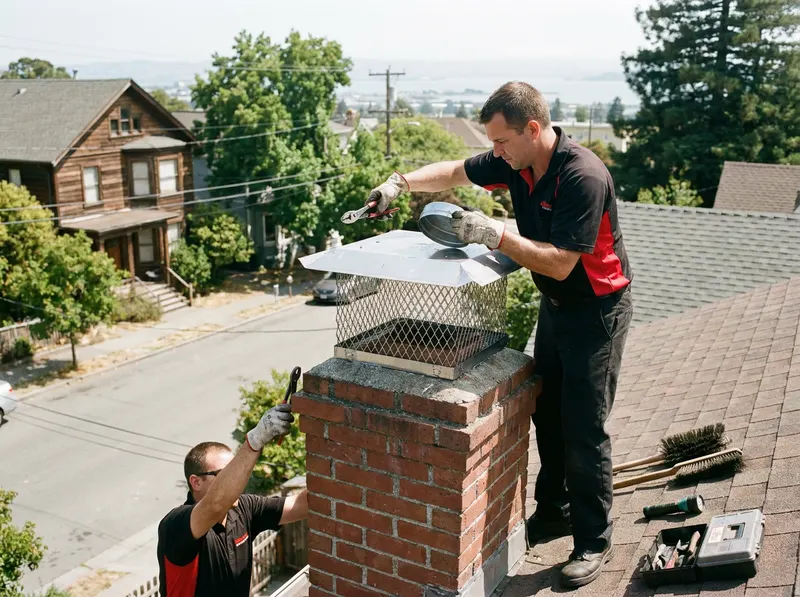
Two problems are usually solved on the same visit. First, the flue is cleared: to remove a bird from a chimney or remove a nest lodged above the smoke shelf, the flue is inspected and the material is worked loose from the crown down, then the chimney is cleaned out so soot and nesting debris do not fall into the firebox on the first fire. Second, the top is capped so it does not happen again. A spark arrestor cap serves double duty in Berkeley, the mesh keeps embers from landing on a wood-shingle or composition roof, and the same screen keeps birds, squirrels, and raccoons out of the flue. NFPA 211 references spark arrestor screening on chimneys serving solid-fuel appliances, and California building code has long required arrestors in wildfire-exposed areas, which covers much of the Berkeley Hills above the Claremont and toward Tilden Regional Park.
Decision-fit comes down to what is in the flue and what is on top. If the chimney is uncapped or has only a rusted-out screen, an animal has open access, and a custom chimney animal guard in 316 stainless mesh is the durable fix, 316 stainless resists the salt-air corrosion that reaches North Berkeley, Westbrae, and Thousand Oaks off the bay, whereas cheaper galvanized or aluminum caps corrode faster in that fog belt. If a raccoon has denned in the smoke chamber, removal comes first and the cap goes on only after the animal and its young are confirmed out, because sealing a live animal inside is both inhumane and a code and odor problem. Chimney swifts are a specific exception: they are federally protected migratory birds under the Migratory Bird Treaty Act, so an active swift nest with eggs or chicks generally cannot be disturbed until the birds have fledged, and the cap is scheduled for after that.
Here is the sequence for a typical job. First, the top is inspected and the flue is scoped to see how far down the nest or animal sits. Second, the material is removed and the flue and smoke chamber are cleaned out. Third, the flue is measured at the top for a fitted cap. Fourth, a 316 stainless mesh animal spark arrestor is fabricated to that size, a standard flue tile takes an off-the-shelf cap, while an oversized crown, a corbeled brick top common on older Craftsman and Victorian homes in Elmwood and the Lorin District, or a multi-flue stack takes a custom guard. Fifth, the cap is fastened at the crown and the work is documented with photos.
An honest note on scope: a spark arrestor is a screen, not a full crown rebuild. If the masonry crown is cracked or the flue liner is damaged, that is a separate repair the estimate will call out rather than hide. Homeowners comparing options in Southside, Northbrae, or the Gourmet Ghetto are welcome to get some quotes; the free on-site estimate states the flue size, the cap material, and the removal cost in writing before anything is scheduled.
Every job gets a firm, written price after a free on-site visit.
Tell us about your animal removal & spark arrestor job in Berkeley and we'll send a clear, written quote, usually the same day.
 Sootsentry Chimney Sweep