A chimney cap is the metal cover over the top of the flue that keeps rain, leaves, squirrels, and roof debris out of the chimney and adds a spark screen. Winter storms coming off the bay push hard against exposed…
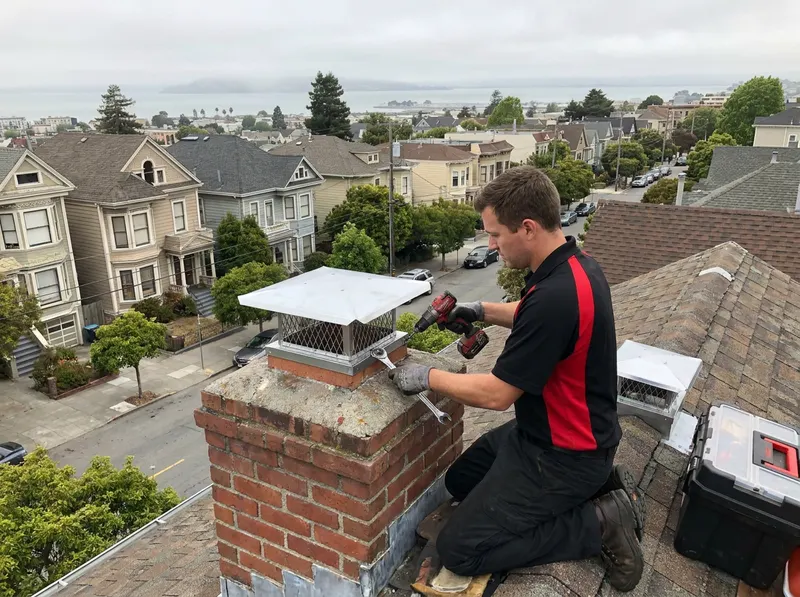
A chimney cap is the metal cover over the top of the flue that keeps rain, leaves, squirrels, and roof debris out of the chimney and adds a spark screen. Winter storms coming off the bay push hard against exposed rooftops in the Berkeley Hills and Thousand Oaks, and a common call is "the wind blew my chimney cap back from my chimney", a cap that lifted, bent, or landed in the gutter. If the cap and its clamps are intact, reattaching the chimney cap and re-tightening or replacing the screws is usually the fix. If the sheet metal is bent, rusted through, or the screen is torn, a new chimney cap replacement is the sounder repair.
Materials decide the price and lifespan. A galvanized-steel cap is the least expensive and typically lasts several years before rust shows near the salt air of the Claremont and Elmwood slopes. Stainless steel resists corrosion far longer and is the common choice for exposed North Berkeley and Northbrae rooftops. Copper is the highest-cost option and is chosen mostly for period Craftsman and Victorian homes where the visible cap matters. Single-flue caps clamp or screw directly to a round or square flue tile; multi-flue caps are a larger fabricated cover that spans the whole crown and are used when two or more flues share one chimney.
The cap sits on the crown, the concrete or mortar slab at the very top. When a cap fails, the crown underneath is often cracked from the same freeze and moisture cycle, which is why chimney crown repair frequently comes up during a cap visit. A hairline-cracked crown can be sealed; a spalling or heaved crown needs re-casting. The National Fire Protection Association standard NFPA 211 and the Chimney Safety Institute of America (CSIA) treat the cap, crown, and flue as one weather barrier, so it is worth checking all three together. A cap replacement paired with a fresh crown seal stops water intrusion that would otherwise reach the smoke chamber below.
Decision-fit is straightforward: if the cap simply blew loose and the metal is undamaged, reattachment is the right call and the least expensive. If the cap is rusted, crushed, or missing, replace it, a bent cap will not seal and re-bending it rarely holds. If the crown is cracked as well, address the crown at the same time so the new cap seats on a sound surface. For a chimney with multiple flues, a single multi-flue cover is usually simpler and tidier than several individual caps. Homes in Westbrae, Southside, the Gourmet Ghetto, and the Lorin District with older masonry chimneys often need the flue measured on-site because tile sizes vary and an off-the-shelf cap may not fit. Every visit includes photo documentation of the cap, crown, and flue so the condition is clear before any work is agreed. A free on-site estimate confirms which repair the chimney actually needs; if the existing cap is fine, that is stated plainly rather than replaced.
Every job gets a firm, written price after a free on-site visit.
Tell us about your chimney cap repair & replacement job in Berkeley and we'll send a clear, written quote, usually the same day.
 Sootsentry Chimney Sweep